

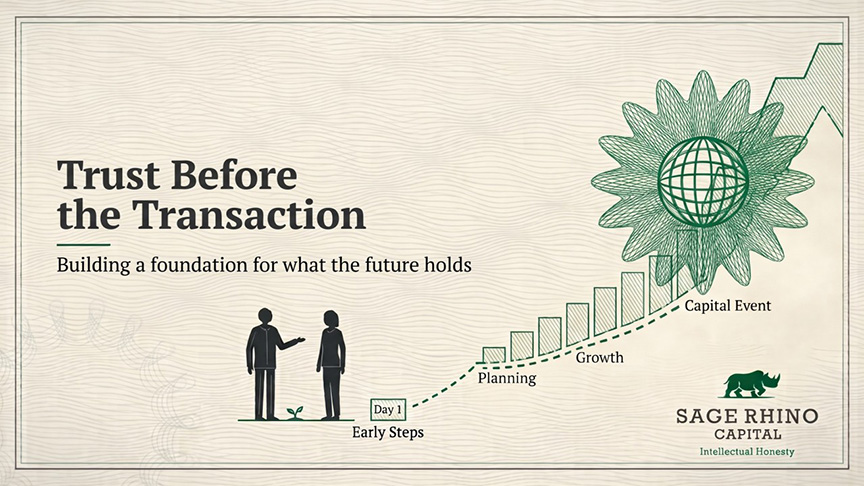
When in life does a person get to test something, of substantial value, before they buy it? In the world of founder and early-employee advisory services, it’s part of the design. The key is building a relationship so that when big decisions need to be made, trust has already been established. As discussed in other newsletters, what’s the value of good advice if someone doesn’t take it? Building the foundation ahead of the moment increases the chances the plan is implemented accordingly.
A common assumption is that a financial advisor becomes relevant once there’s money to manage. For employees at growth-stage private companies, and founders of the same, that assumption is backwards — the highest-leverage decisions happen well before a liquidity event, when there’s little or nothing to manage yet.
For clients, the benefit is immediate: they can receive substantial planning advice before they have assets available to manage. For advisors, they get to ensure the client is a good fit for the firm’s culture and ideology. That makes the pre-money period less about managing assets and more about helping the client make decisions that determine what eventually reaches the portfolio.
The Playbook:
1. Confirm QSBS eligibility early.
Confirming eligibility years before an exit means there’s time to plan around whichever framework actually applies, instead of finding out after the fact.
2. Get an employment attorney on file before an offer, not after.
Negotiating leverage over: vesting, exercise windows, severance terms; is highest at the offer stage. Waiting until a departure or a dispute means negotiating from a much weaker position.
3. Build an option exercise plan.
Whether and when to early-exercise options is a decision with real tax and cash consequences. Made deliberately, over time, it looks very different than a decision made under pressure.
4. Model the tax bill before the transaction is announced.
A range of exit values, transaction structures, and exercise dates can produce very different tax outcomes. Scenario planning helps the client understand the potential liability, identify which decisions remain controllable, and mentally prepare for the difference between the top-line number and the deployable cash.
5. Build a liquidity runway.
Option exercises, tax payments, career changes, and transaction delays can require meaningful cash before any proceeds arrive. A pre-event cash-flow plan defines how much liquidity the client needs and prevents an otherwise sound strategy from creating a short-term cash crisis.
6. Coordinate the full advisory team.
The financial advisor can help the client identify when to involve a CPA, estate-planning attorney, employment attorney, insurance professional, or charitable-planning specialist—and make sure each professional is working from the same assumptions.
7. Make estate and gifting decisions while valuations are still lower.
If transferring shares to family members or trusts is appropriate, timing can materially affect the planning opportunity. Starting early leaves room for legal review, valuation work, and implementation before a transaction compresses the timeline.
8. Design a charitable strategy before the liquidity event.
Clients who expect to give can evaluate whether contributing shares before a sale may better support their goals than donating cash afterward. The key is to address the strategy before transaction restrictions or binding commitments limit the available choices.
9. Write the post-event investment plan before the proceeds arrive.
Decisions about diversification, spending, debt repayment, taxes, and major purchases are easier to make before the account balance changes the emotional stakes. A written plan gives the client a framework for the first 30, 90, and 365 days after liquidity.
The intent is rarely the problem. The execution gap is what costs people the outcome. By starting before the capital arrives, the advisor helps the client preserve choices, coordinate decisions, and enter the liquidity event with a plan rather than a deadline.